
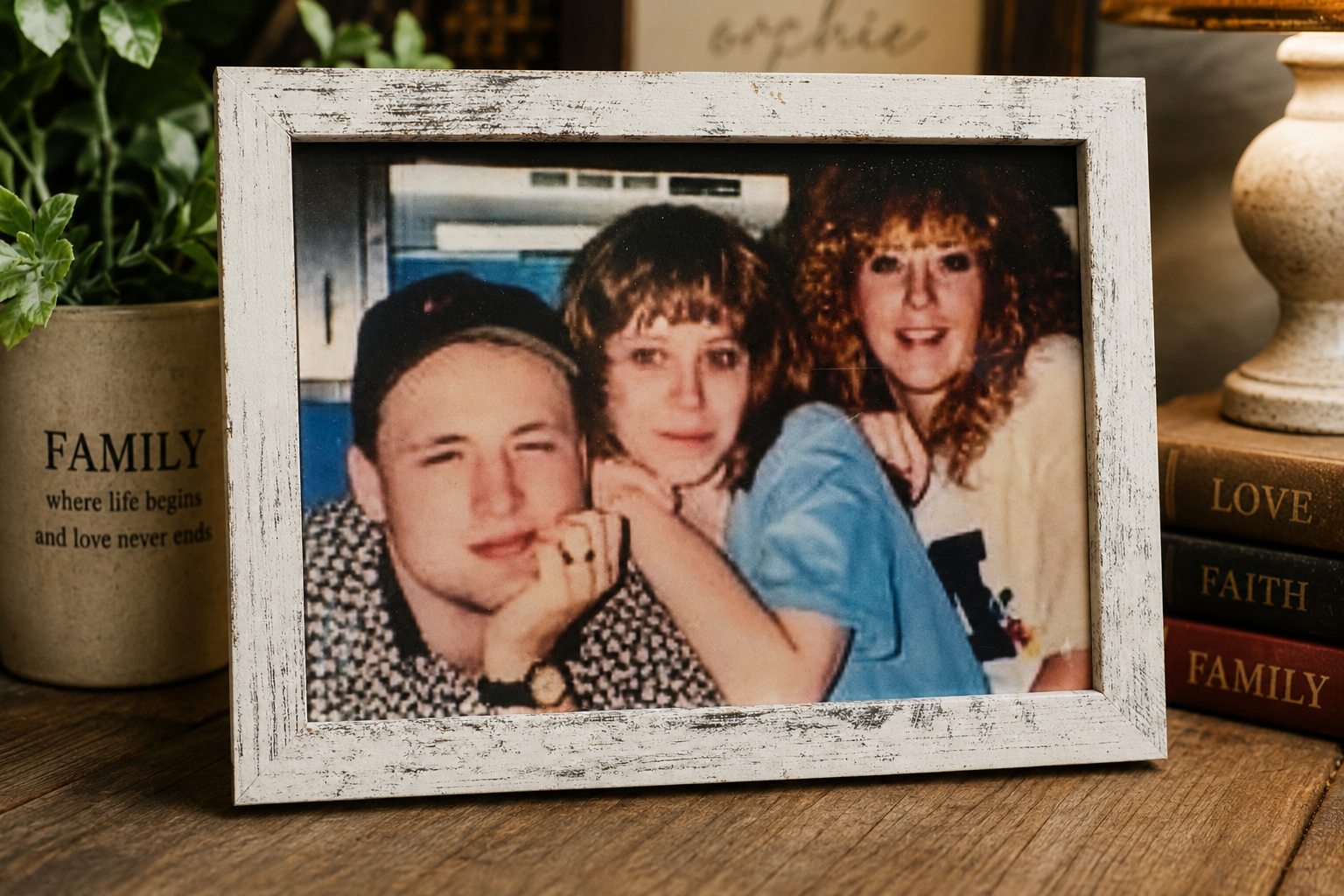
How Your Siblings Create Your Happiness in Life
The longest relationship of your life is not your marriage, it’s not your friendships, it is not even the relationship with your own parents.
It’s the one with your sibling, and almost nobody is told what that actually means.
Most people will spend more time on this earth with their brother or sister than with anybody else they will ever meet.
They were there before your first memory.
They will be there after your parents are gone.
They are the only person on the planet who shares the exact same childhood as you, the same kitchen, the same arguments, the same Christmas mornings, the same family secrets.
And it’s one of the least studied close relationships in psychology.
Research now shows the level of conflict in your sibling relationship at age 23 is one of the strongest predictors of your anxiety and depression decades later. The way you treated your brother or sister in from early childhood through your 20s shapes your mental health all the way through and beyond your 40s.
A warm sibling bond protects against loneliness in old age the way no other relationship can because as friends fall away, as parents pass, as partners come and go, your sibling remains.
They are the only proof that the childhood… your childhood actually happened. Your brothers and sisters are your best witness to the homelife that you had… what actually happened… and all of the spoken and even unspoken family secrets, crisis, monumental events, and special memories that make you smile… you know… the things that make you… you.
So if you have a brother or sister you haven’t called, stop waiting. The longest relationship of your life is also the one you keep treating like it has the most time.
Keep reading if you want to learn how to revive and reconnect to this very important part of your life… and one of the best predictors of your future.
The Relationship Nobody Talks About
Modern culture spends enormous amounts of time talking about romance, attraction, marriage, parenting, and dating. Entire industries revolve around helping people improve romantic relationships. Thousands of books have been written on love languages, communication, attachment styles, conflict repair, intimacy, sex, parenting, and emotional connection.
Very little attention is given to the relationship quietly running underneath all of it.
The sibling bond.
And yet research increasingly shows that sibling relationships may have a greater long-term impact on emotional health, resilience, loneliness, identity, and life satisfaction than people realize.
A 2024 longitudinal study found that sibling warmth at age twenty-three strongly predicted lower anxiety and depression at age forty-one, while chronic sibling conflict predicted poorer emotional outcomes later in life. Researchers found that sibling closeness creates emotional resilience that often outlasts peer friendships and, in some cases, even correlates more strongly with long term wellbeing than marital satisfaction itself.
That should wake people up.
“Your sibling is the keeper of your original story and the witness that it actually happened.”
A sibling remembers the version of you that existed before the world taught you how to perform.
Before the masks.
Before the business card.
Before the public image.
Before success.
Before failure.
Before heartbreak.
Before the world told you who you should become.
They remember the original version.
The same kitchen.
The same Christmas mornings.
The same slammed doors.
The same tension in the house.
The same laughter.
The same losses.
The same father.
The same mother.
The same strange little family rituals nobody else would ever understand.
The Witnesses of Your Childhood
Toni Morrison once described a sister as “a special kind of double of you.”
That phrase carries enormous psychological truth.
Siblings are mirrors.
Same home. Different experience.
One child remembers peace.
Another remembers tension.
One child felt protected.
Another felt invisible.
One child became responsible.
Another became rebellious.
One child became the achiever.
Another became the comedian.
One child learned to hide.
Another learned to fight.
The sibling relationship becomes the living record of the family system itself.
“Your brother or sister may be the only person alive who remembers the child you once were… and parts of you that make you you.”
Human beings need continuity.
We need witnesses to our story.
Psychologists refer to this partly as shared autobiographical memory. In simple language, part of your identity becomes stabilized by people who remember your life with you.
This may explain why sibling estrangement cuts so deeply.
It feels like losing part of your own history.
Louisa May Alcott once wrote, “Help one another is part of the religion of our sisterhood.”
That may be one of the simplest definitions of a healthy sibling relationship ever written.
Help one another.
Protect one another.
Tell the truth to one another.
Honor one another.
Carry the family story together.
Why Sibling Relationships Shape Happiness
Research consistently shows that emotionally close sibling relationships are associated with lower loneliness, greater resilience under stress, stronger emotional regulation, higher life satisfaction, and even better physical health outcomes in later adulthood.
That is not sentimental language.
That is functional reality.
A healthy sibling bond protects against loneliness in old age in ways few other relationships can because as friends drift away, as parents pass, as careers end, and as life narrows with age, your sibling often remains tied to the original story of your life.
They are more than relatives.
They are witnesses.
The only proof that the childhood actually happened.
The only other person who remembers the smell of the house after Thanksgiving dinner.
The sound of your father’s footsteps.
The tension before an argument.
The look on your mother’s face during difficult seasons.
The strange inside jokes.
The old songs.
The little traditions.
The hard years.
The good years.
“A healthy sibling is a bridge between the child you were and the adult you are still becoming.”
A good sibling relationship helps people regulate grief.
Process family pain.
Navigate aging parents.
Carry responsibility.
Remain emotionally grounded.
Feel less alone.
And remember who they are.
A man who has a healthy relationship with his brother often has someone who can challenge him honestly without needing to impress him.
A woman who has a healthy relationship with her sister often has someone who knows the entire story without needing the entire explanation.
A strong sibling can become a source of courage during divorce, sickness, grief, financial hardship, addiction recovery, parenting stress, and the long emotional weight of aging.
The Family Roles We Never Stop Playing
And a damaged sibling relationship can quietly leak pain into every other area of life.
Comparison.
Competition.
Favoritism.
Inheritance disputes.
Old roles.
Unspoken resentment.
Family wounds.
Children adapt to survive family systems.
One becomes the responsible one.
One becomes the funny one.
One becomes invisible.
One becomes the achiever.
One becomes the peacemaker.
One becomes the rebel.
Then adulthood arrives while the old emotional scripts remain active underneath the surface.
“Many adult sibling conflicts are childhood roles wearing grown up clothes.”
This is why healing sibling relationships requires maturity and courage.
The past must be acknowledged without becoming worshiped.
The pain must be named without becoming weaponized.
Truth matters.
Ownership matters.
Humility matters.
What Scripture Says About Brothers and Sisters
Colossians 3:13 says:
“Bear with each other and forgive one another if any of you has a grievance against someone.”
Romans 12:10 says:
“Love one another with brotherly affection. Outdo one another in showing honor.”
Outdo one another in honor.
That is powerful.
Outdo one another in respect.
Outdo one another in repair.
Outdo one another in encouragement.
Outdo one another in loyalty.
Scripture repeatedly shows the immense power of sibling relationships.
Cain and Abel.
Jacob and Esau.
Joseph and his brothers.
Miriam, Moses, and Aaron.
Mary, Martha, and Lazarus.
The prodigal son and his older brother.
Sibling relationships shape destiny.
They can produce rivalry or redemption.
Bitterness or belonging.
Division or legacy.
Psalm 133:1 says:
“How good and pleasant it is when brothers dwell in unity.”
Unity creates strength.
Unity creates stability.
Unity creates resilience.
Unity creates blessing across generations.
And unity rarely sustains itself accidentally.
Great Families Rarely Happen by Accident
Healthy sibling relationships must be nurtured intentionally.
Protected intentionally.
Maintained intentionally.
Every relationship drifts without investment, and sibling relationships are especially vulnerable because people assume there will always be more time.
There will not.
Families that remain emotionally close across decades usually create rituals of connection, loyalty, forgiveness, humor, shared mission, and mutual respect. They learn how to repair conflict before distance hardens into identity.
“Sibling closeness is less about perfection and more about purposeful maintenance.”
One modern example is Donald Trump and his relationship with his siblings.
Whatever a person thinks politically, one reality remains clear: the death of Fred Trump Jr. deeply shaped the course of Donald Trump’s life.
Fred struggled with alcoholism and died young at age forty-two. Donald Trump has repeatedly spoken about how much he admired and loved his brother and how watching alcoholism destroy him profoundly affected his own decisions for decades afterward. Trump has often said he never drank alcohol because of what happened to Fred.
That is the power of a sibling relationship.
One brother’s life altered another brother’s future.
A sibling can become a warning.
A source of grief.
A source of motivation.
A source of wisdom.
Sometimes all at once.
Trump also maintained long standing relationships with his siblings throughout much of his life, particularly with Robert Trump and Maryanne Trump Barry.
Another strong example is the Walton family.
The children of Sam Walton built one of the most influential family legacies in modern business history. Their success required long term trust, communication, shared values, emotional maturity, and the ability to preserve family connection across generations.
Families fracture constantly over money, inheritance, ego, power, and control.
The Walton siblings managed to preserve cooperation while stewarding one of the largest business empires in the world.
That does not happen accidentally.
It requires humility.
Communication.
Systems.
Respect.
Shared purpose.
And the wisdom to value the relationship more than winning every disagreement.
“Strong sibling relationships become emotional infrastructure for families, businesses, and entire legacies.”
This is true in our families too.
Siblings who remain emotionally connected often create healthier environments for their own children.
Cousins remain connected.
Family traditions survive.
Parents age with greater support.
Funerals become less lonely.
Holidays become richer.
Stories survive.
Identity survives.
The family remains a tribe instead of becoming scattered individuals who merely share DNA.
Proverbs 17:17 says:
“A friend loves at all times, and a brother is born for adversity.”
A sibling relationship carries a purpose larger than nostalgia.
It exists to help carry weight.
To help survive grief.
To help hold history.
To help carry responsibility.
To help keep one another from becoming strangers to your own past.
How I Coach People to Renew and Strengthen the Sibling Bond
Step 1: Tell the Truth About the Relationship
Start with honest diagnosis.
Warm.
Distant.
Transactional.
Competitive.
Painful.
Estranged.
Polite but emotionally empty.
People cannot heal relationships they refuse to describe accurately.
Ask:
“What is actually true about this relationship right now?”
Step 2: Identify the Old Family Roles
Every sibling relationship carries invisible childhood roles.
The achiever.
The rebel.
The caretaker.
The forgotten child.
The clown.
The responsible one.
The peacemaker.
The golden child.
The scapegoat.
Most adults continue playing those roles unconsciously long after childhood ends.
Ask:
“What role did you learn to play in your family?”
Then ask:
“What role is your sibling still playing?”
Awareness changes everything.
Step 3: Separate Memory from Meaning
Siblings often remember the same childhood completely differently.
Children experience the same family from different positions.
Ask:
“What did this experience mean to you?”
“What might it have meant to them?”
Curiosity opens doors that defensiveness keeps closed.
Step 4: Own Your Contribution
Every damaged relationship contains mutual contribution somewhere inside it.
Ask:
“How did you hurt them?”
“How did you dismiss them?”
“How did pride, withdrawal, sarcasm, silence, superiority, or competition damage the relationship?”
Ownership changes the emotional climate immediately.
Step 5: Grieve What Never Existed
Many adults keep demanding a different childhood instead of grieving the one they actually had.
Some people wanted protection.
Some wanted affection.
Some wanted fairness.
Some wanted attention.
Some wanted loyalty.
The grief must become honest before the relationship can become healthy.
Step 6: Make the First Honorable Move
Repair usually begins small.
A text.
A phone call.
A letter.
A shared memory.
A short apology.
A coffee invitation.
One simple sentence can reopen a relationship:
“I was thinking about you today and realized I do not want more years to pass between us.”
Step 7: Build Trust Through Consistency
People often try to solve thirty years of pain in one emotional conversation.
Healthy repair usually happens through repeated trustworthy behavior.
Return calls.
Show up.
Remember birthdays.
Stop making cutting jokes.
Stop bringing up old failures as identity labels.
Become emotionally safe again.
Step 8: Ask Deeper Questions
Good sibling relationships require curiosity.
“What was childhood like for you?”
“When did you feel alone in our family?”
“What do you think I never understood about you?”
“What do you wish our relationship could become now?”
Questions soften walls.
Step 9: Create Rituals of Connection
Relationships survive through rhythm.
Monthly breakfasts.
Annual trips.
Sunday phone calls.
Shared holidays.
Group texts.
Prayer together.
Storytelling dinners.
Yearly family traditions.
Relationships weaken when they only exist during emergencies.
Step 10: Speak Honor Out Loud
Many siblings go decades without directly blessing one another.
Say the good clearly.
“I am proud of you.”
“You carried more than I realized.”
“You were stronger than I understood.”
“I love you.”
“I am grateful God made you my brother.”
“I am grateful God made you my sister.”
Blessing heals places that silence slowly starved.
“A sibling who loves you well can see the old pattern before it becomes your next mistake.”
Final Challenge
Your sibling is the only proof that the childhood actually happened.
Your only witness to the home that you made.
So if you have a brother or sister you haven’t called, stop waiting.
The longest relationship of your life is also the one you keep treating like it has the most time.
It doesn’t.
Nothing does.
Call your brother.
Call your sister.
Start there.
Suggested Reading
- The Sibling Effect by Jeffrey Kluger
- Sibling Relationships Across the Life Span by Victor G. Cicirelli
- Adult Sibling Relationships
- Brothers, Sisters, Strangers by Fern Schumer Chapman
- The Four Loves by C. S. Lewis
- Emotionally Healthy Spirituality by Peter Scazzero
- Boundaries
- Family Therapy in Clinical Practice by Murray Bowen
- Proverbs 17
- Psalm 133
- Romans 12
- Colossians 3
- Ecclesiastes 4
- Genesis accounts of Cain and Abel, Jacob and Esau, and Joseph and his brothers
- Luke 15 and the story of the prodigal son and the older brother